Sunday, 14 April 2013

Cyber Crime


Everyone who works on a computer must be familiar with the term "Cyber Crime". Initially, when man invented computer and then the technology for communicating between computers was evolved, he would have never thought that the cyber space he is creating could be flooded with any crime i.e. cyber crime. But now almost all of us might have heard the term computer crime, cyber crime, e-crime, hi-tech crime or electronic crime which is nothing but an activity done with a criminal intent in cyber space. Simply put, it is an activity which is generally criminal in nature, where a computer or network is the source, tool, target, or place of a crime. To say in one line, "Cyber crime refers to all the activities done with criminal intent in cyberspace."
Such crime involves an information technology infrastructure, including illegal access (unauthorized access), illegal interception (by technical means of non-public transmissions of computer data to, from or within a computer system), data interference (unauthorized damaging, deletion, deterioration, alteration or suppression of computer data), systems interference (interfering with the functioning of a computer system by inputting, transmitting, damaging, deleting, deteriorating, altering or suppressing computer data), misuse of devices, forgery (ID theft), and electronic fraud.
This article intends to give an overview of Cyber Crimes since in e-life (of which we all are a part of) conventional crimes like extortion, forgery etc. are being done with the help of computers; which most of us are using for online monetary transactions.
In today's e-Age, 'Crime' has extended itself beyond physical assault or mental torture; now it also affects our e-life. E-Life means our existence & living in the cyber world. Every one of us is a part of this cyber world, directly or indirectly, since computers & internet are now an integral part of our personal & professional life. Just like any other invention, Computers & Internet are a boon to human kind if used in a right way and to the advantage of the society. However, as we all know, everything has its pros and cons and so computers & internet are not an exception. If we consider 'Cyber Crime' as virus then it won't be untrue to say this virus is corrupting man's significant development (computers and internet) which is responsible for developing civilized society for men. Cyber Crime is a menace all over the world and is the one of the most difficult & challenging to detect & investigate. You will find it interesting to note that even the official website of the Cyber Crime Investigation Cell of Crime Branch Mumbai quotes "The invisible criminal is dangerous than the visible one".
You may be wondering why one should know about Cyber Crime?
Most of us are using internet and computers for online transactions where we transmit personal information and possibly do monetary transactions. If your personal information goes in wrong hands and you become bankrupt or you start receiving absurd mails or your e-mail account gets flooded with unwanted mails; means you have become a victim of Cyber Crime.
Cyber Crime has various forms which may include hacking (illegal intrusion into a computer system without the permission of owner), phishing (pulling out the confidential information from the bank / financial institutional account holders by deceptive means), spoofing (getting one computer on a network to pretend to have the identity of another computer in order to gain access to the network), cyber stalking (following the victim by sending e-mails or entering the chat rooms frequently), cyber defamation (sending e-mails to all concerned / posting on website the text containing defamatory matters about the victim), threatening (sending threatening e-mails to victim), salami attacks (making insignificant changes which go unnoticed by the victim), net extortion, pornography (transmitting lascivious material), software piracy (illegal copying of the genuine software / programs), email bombing, virus dissemination (sending malicious software which attaches itself to other software), IPR theft, identity theft, data theft, etc.

Hacking, destroying files and data through spreading virus are the largest number of offences in the cyber world.
"Russia, China and Brazil are world leaders in cyber crime. India is fast emerging as a major hub of cyber crime, however our legal system is already in place to tackle this menace of cyber crime and to control it and punish the guilty. Cyber Crime, which we may define as "an unlawful act wherein the computer is either a tool or a target or incidental to the crime", has both civil as well as criminal remedies.
So let's talk about the remedies available against such crimes. In India, the offence of Cyber Crime is covered under Information Technology Act 2000 and under the Indian Penal Code.
Cyber Crime Cells have been established by law in major cities. These Cells function directly under the Commissioner of Police of respective cities. Central Bureau of Investigation (CBI) already has a cyber crime wing operational since 1999.
The Government has established "The Cyber Regulations Appellate Tribunal" under the Information Technology Act, 2000. The Tribunal has the same powers as are vested in a Civil Court for requiring the discovery and production of documents, receiving evidence on affidavits. But the decisions of the Tribunal can be contested by the High Court. The Information Technology Act not only applies to the offence committed in India, but it can also be used to bring offenders from foreign countries to India for trial.
Powers of Cyber Crime Cells:
Any police officer, not below the rank of a Deputy Superintendent of Police, or any other officer of the Central Government or a State Government authorised by the Central Government in this behalf may enter any public place and search and arrest without warrant any person found therein who is reasonably suspected or having committed or of committing or of being about to commit any offence under this Act.
Punishment for Cyber Crime:
A person found guilty of cyber crime shall be punishable with imprisonment for a term which may extend to three years or with fine or with both.
Salient features of the Information Technology (Amendment) Act, 2008:
The Information Technology (Amendment) Act, 2008 was enacted in October 2009.
The term "digital signature" has been replaced with "electronic signature" to make the Act more technology neutral. A new section has been inserted to define "communication device" to mean cell phones, personal digital assistance or combination of both or any other device used to communicate, send or transmit any text video, audio or image. A new section has been added to define "cyber café" as any facility from where the access to the internet is offered by any person in the ordinary course of business to the members of the public.
There is an addition of several new offences into the Act. Section 66 has now been expanded to include sections 66A, (offensive messages) 66B, (Receiving stolen computer) 66C, (Identity theft), 66D (Impersonation), 66E (Voyeurism) and 66 F (Cyber Terrorism). Section 67 has been expanded to include Sections 67A (Sexually explicit content), 67 B (Child Pornography),
In short about Cyber Terrorism In All Over The World:
Cyber terrorism is the premeditated use of disruptive activities, or the threat thereof, against computers and/or networks, with the intention to cause harm or further social, ideological, religious, political or similar objectives, or to intimidate any person in furtherance of such objectives.

Cyber terrorism can have a serious large-scale influence on significant numbers of people. It can weaken countries' economy greatly, thereby stripping it of its resources and making it more vulnerable to military attack.

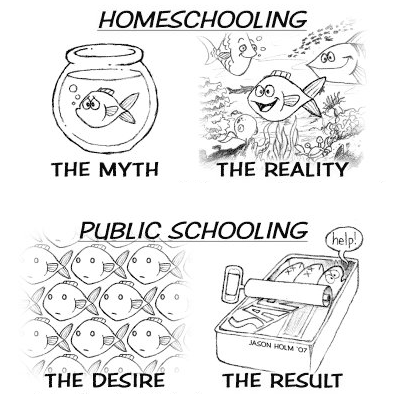
Home Schooling Advantages Vs. Disadvantages

What options do parents have to combat this downward spiral? Initially, private school was thought to be the answer. As enrollment in private schools soared many parents failed to see a difference between public and private schools. The problems were still the same.

The option of home schooling has been around for a long time; however, until recently it had not been so popular. The idea of home schooling seems like a cure-all to many parents due to the advantages this type of education provides over traditional schools. Children who are home schooled can avoid many of the problems schools have become known for. For one, the environment is less threatening. Children can learn without fearing other students, aggressive or nasty teachers, and be under the constant supervision of parents. In addition, home schooling allows parents to dictate the academic course of their children. Home schooling also allows students to proceed at their own speed. If a child is weak at multiplication and division, a parent can focus lessons on those skills in favor of another skill that the child might grasp rather easily.

Home schooling is also advantageous because it keeps children away from other students that may be corruptive forces. There are many students in school who do not value learning. This is not any fault of the schools; however, it is still a painful reality. These students can lead to the destruction of a stable learning environment. Home schooling keeps children focused on learning and not on avoiding social pressures. 


It may sound like the perfect option, but there are many disadvantages of home schooling. First of all, home schooled children are usually less socialized. While schools can sometimes be the breeding ground for poor social behaviors, school is also a place where students learn to interact with others and build social skills. It seems a bit like a catch 22.

In addition, another drawback to home schooling could be implementation of an educational plan. Many parents are not qualified as teachers and may not understand what is necessary to ensure a child has access to the proper curriculum.

Finally, another disadvantage to home schooling is the necessity for parents to take full responsibility for their child's education. If you choose to home school your child there is no one for you to blame if your child does poorly. The responsibility falls completely on the parent.

There are many advantages and disadvantages to home schooling. Before you begin a home schooling plan make sure you have evaluated your ability to properly instruct your child and provide a quality learning experience. If you do not think you can handle it, you might as well send your child to school but become more involved with his or her education.

Disadvantages of Home Schooling

Home schooling is a process that requires a massive amount of time and dedication. If you want to home school your child you must be present for a large part of the day. Kids are kids. Depending on how motivated by academic success your child is, he or she may not require constant supervision. However, in many studies, parental supervision is the key behind the success of home schooling programs.

Parents must also possess instructional skills or access to someone who can teach effectively. Simply putting your child in a room with textbooks will most likely result in home schooling failure. In addition, you will have to purchase materials that public and private schools provide for students.

There is also the need to be able to serve as guidance counselor as your child may require specialized instruction due to a learning disability. Public and private schools usually provide these services with qualified individuals.


One important benefit of an academic institution is the opportunity for children to become properly socialized. Attending school with other children from all walks of life leads to the development of social skills. One of the disadvantages of home schooling is the relative isolation children have from their peers.

Many parents find comfort in blaming the educational system for the shortcomings in their child's academic performance. If you choose to home school you will be accepting full responsibility for the outcome of your child's education. This is more of a burden than it seems. Studies have shown that many home schooling ventures fail due to the fact that the home generally lacks qualified educators. Many parents have gripesabout teachers, but the fact is that they generally have to teach large classes filled with children with diverse learning needs. In addition, certified educators have taken teaching classes and have passed state examinations to receive their teaching certificates.

When you approach the issue of home schooling you must examine both sides. Sure, there are plenty of advantages, but if you forget to look into the disadvantages, you may be setting yourself up for failure

Education Loans In India


India is a developing country and is forging ahead to create a definite niche in the global economy. Education is an important factor for the development of any country. India is not far behind in an attempt to provide education to every child by granting education loans to students. All banks in India provide education loans to students for studies in India, as well as abroad. Apart from banks, there are a number of charitable institutions and other private funding associations in India that provide education loans to students.

There are a large number of Indian students who prefer to go abroad for their post-graduation studies. The loans prove to be a boon, mainly to the students whose education and stay abroad would be very costly. Some private banks grant education loans and also cover the expenses of lodging and travel. Most private banks in India offer flexible options related to education loans. Certain private banks offer very low interest rates and give various allied benefits to the borrowers, by opening a savings account for them or providing them with debit cards. Some banks also provide customized education loans, created for specific requirements. They grant secured as well as unsecured loans. Secured loans can be repaid in seven years by holding residential properties or shares as security. The unsecured loans can be repaid in four years. Various banks offer exclusive schemes on educational loans to their customers, of six months or more.
The education loans in India are mostly granted to the parents of the students, unless or until the students are eligible, above 18 years of age. Most nationalized and private banks providing education loans, take the authorization of the college or university into consideration. They do not grant loans to students who are not from approved educational institutions.

The Secret To US Department of Education Loans


If you have heard about any kind of Federal financial aid for students, you are already familiar with US Department of Education loans. The US Department of Education handles all government aid for defraying the cost of attending college in America, from grants to loans. The first thing that you will need to do to apply for US Department of Education loans is to fill out a FAFSA, or Free Application for Federal Student Aid form. FAFSA forms compare the amount of money required to attend a specific college to the amount of money that can be expected to be paid by the family of the attendee. Any difference is the amount of money eligible for student aid.

Qualifying for US Department of Education Loans
US Department of Education loans have specific qualifications that an applicant must meet to be eligible. The qualifications include US Citizenship (some non-citizens with social security numbers are also eligible), financial need, possession of a valid Social Security Number, and proof of eligibility for higher education in the form of a high school diploma, General Education Development (GED) certificate, or similar. Furthermore, applicants for US Department of Education loans must be in good financial, academic, and legal standing. In other words, they must be registered with the Selective Service if required, they must not have defaulted on a student loan in the past, they can have no record of conviction on charges of sales or possession of drugs, and they must maintain a certain grade point average (GPA) to continue to receive student loans from the Department of Education.
Types of US Department of Education Loans
There are three main possibilities when considering US Department of Education loans: grants, which are monetary gifts, student loans, and work-study programs where the money for education is earned. Only in the case of student loans
does the money need to be repaid. Most federal grants are based solely on financial need, and some are given on a first-come-first-served basis, so it is important to apply as early as possible.
Work-Study programs are not technically US Department of Education loans, but they are a federally mandated way to
receive financial aid to attend college. A number of work-study hours are specified as part of the financial aid package.
These usually involve jobs working with non-profit companies or on campus, and pay a modest salary. The money earned can be used for college tuition. True US Department of Education loans include the Perkins Loan, the Stafford Loan, and the PLUS loan for parents.
Perkins loans have a particularly low interest rate and can be paid back over a time period of as long as 10 years. There are a limited number of Perkins Loans available to each school every year. The Stafford Loan has a higher interest rate than the Perkins loan, and doesn't necessarily offer a grace period after graduation. However, there are more Stafford loans offered by the US Department of Education every year. Stafford loans are even available to students who don't have a pressing financial need. Stafford loans may be paid off over a period of as long as thirty years.
PLUS loans are the final type of US Department of Education loans. They are offered to parents of undergraduates, as opposed to the students themselves. Payments on Federal PLUS loans start two months after the money is received, and can be paid off over a ten-year term.
Mark Kessler's website offers a comprehensive free resource of college financial aid. Don't even think about paying for school until you've read this about Consolidating Student Loans, as well as Alternative Student Loans, ACS, Bad Credit, and Federal financial aid for students, including a variety student loan articles.


Higher Education Loans


Education loans are loans taken for educations purposes. Educational loans are of many kinds: according to the sponsor (federal or private), according to the beneficiary (undergraduate, continuing education, insurance loans, parent loans, payment loans), according to the course: law school, medical school, dental school, MBA, general graduate, and post graduate. There are also career loans for people who are pursuing graduate or postgraduate education on a part-time to full time basis including evening, weekend, distance learning and continuing education programs.
Higher education loans are for graduate and post graduate courses. There are certain eligibility criteria to be met for getting these loans sanctioned. The applicant should be a graduate or professional student in a degree or certificate program and should be enrolled in school at least half-time (or as determined by the school). For credit-worthy applicants, the borrower or the co-signer should have good credit, employment, and residence history of at least 2 years. They should also have proof of income and should be a US citizen or a permanent resident and has resided in the US for the past 2 years. For a credit-ready borrower, the eligibility is US citizenship or a permanent residency (have resided in the US for the past 2 years). Certain credit criteria have to be satisfied. Most of these criteria are similar for continuing education loans as well. The minimum loan amount for higher education loans is $1,000 while the maximum limit is $30,000. The minimum repayment amount is $25. Maximum repayment period is 20 years. There are also deferment options available.

These days, getting a higher educational loan has become very easy. There are online applications as well as applications through the telephone. All that is required is the social security number, date of birth, employer's name, phone number, years of employment, gross annual income (adjusted gross income for self employed individuals) and monthly rent, or mortgage payment. There are many loan programs to choose from. Repayment options are also sundry including standard repayment, graduate repayment, income-sensitive repayment, consolidation and pre-payment.
There are many loan options according to school and state. Information about these can be obtained from your school. There are also several websites that have up-to-date information about higher education loans. These also have easy options and tools such as loan calculators. Loans can be compared and even applied for online.
Education Loans provides detailed information on Education Loans, Government Education Loans, Private Education Loans, Higher Education Loans and more. Education Loans is affiliated with Consolidate College Loan

Education Loans - Meet College Expenses at Low Cost Finance


Higher education has become costlier for a student so much so that an education loan is now considered a necessity. As a consequence there are now more sources available to a student for taking education loans. Students are now in a better position of availing education loan as per their requirements.


There are two main sources of education loans. One source is the government funded loans and the other is private lenders. Usually students prefer taking education loans from government bodies as they can provide a subsidized loan. The advantage of subsidized education loans is that they are cheaper. The subsidy is provided by the Federal Government in USA and by the finance ministry in other countries. On the other hand, private lenders will charge an interest rate on education loans. There is a Federal family education loan program that is considered as most useful because it provides affordable and flexible options regarding educational loans. Under the program students are charged a very lower interest rate on education loans and students are given convenient and larger repayment duration.
Students do not have to face any problems in paying back education loans. All lenders either subsidized loan providers or private lenders, give students ample time for clearing the loan. Students are not working people and hence do not earn sufficiently for immediately starting paying back education loans. Students can start paying back federal educational loans six months after they have finished their collage education. Usually ten year repayment duration is offered for education loans. For greater educational loans the repayment duration may be larger.
Some requirements are to be followed for education loans. The student applying for education loans must have attained the age of eighteen years. If the student is applying for a private education loan then he or she is expected to bring a co-signer along with. Credit report of the student also may be required for the loan. Usually credit unions provide educational loans on taking a property of student like a vehicle as collateral.
As far as paying interest rate is concerned, a student has the option of paying or not paying during the collage education term. However if some amount is paid towards interest then it becomes a lot easier for the student to pay off the remaining amount after he has completed collage education.
Before applying to a particular lender, compare terms-conditions and interest rates of different lenders. These lenders can be approached on their web sites. Surely education loans are of a great help to student who are going for a collage education.